Navigating the 2026 Challenges of Managing a Global Travel Program
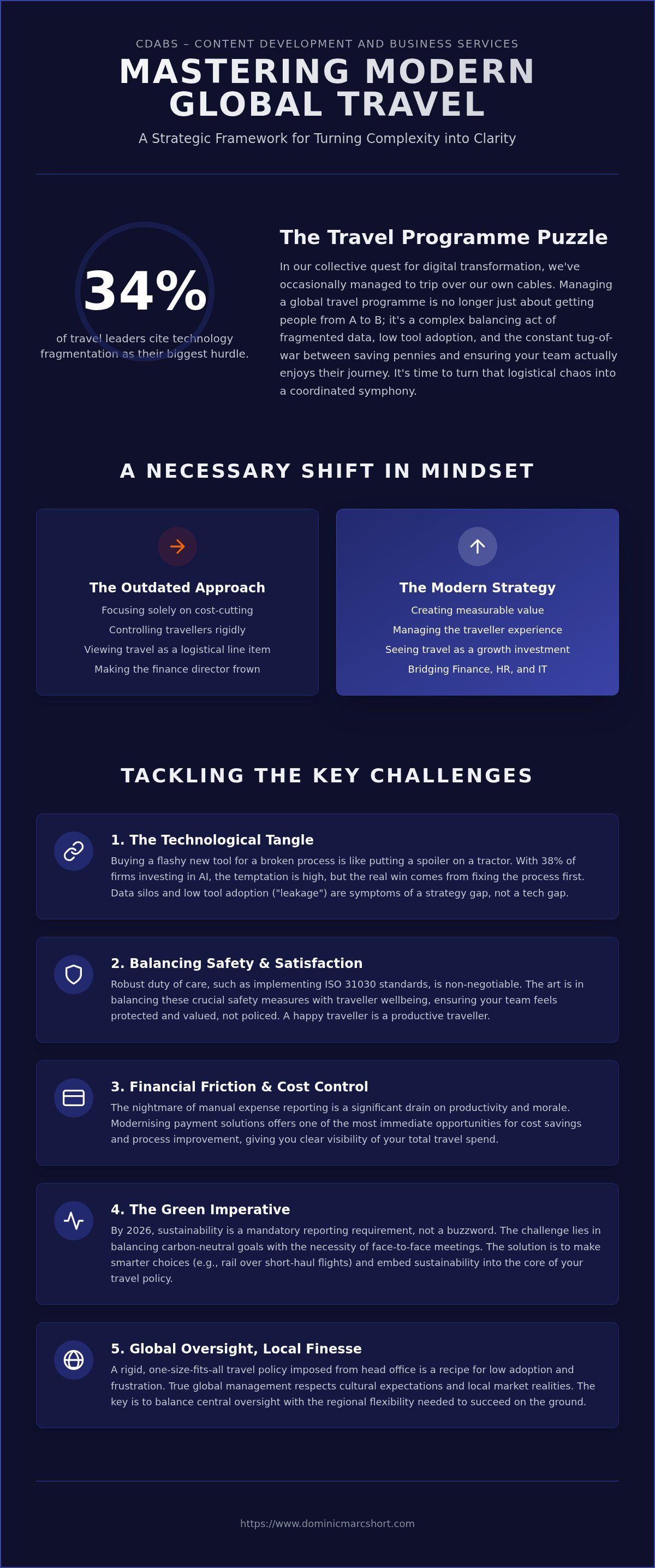
Did you know that 34% of travel leaders now cite technology fragmentation as their single biggest hurdle? It appears that in our collective quest for digital transformation, we've occasionally managed to trip over our own cables. Managing a global travel programme is no longer just about getting people from A to B; it's a complex balancing act that can feel a bit like herding cats across multiple time zones. You're likely wrestling with fragmented data, low tool adoption, and the constant tug-of-war between saving pennies and ensuring your team actually enjoys their journey. These are the common challenges of managing a global travel program that keep even the most seasoned managers awake at night.
We're here to help you turn that logistical chaos into a coordinated symphony. This guide provides a strategic framework to master the complexities of modern corporate travel, ensuring you achieve the visibility you need without sacrificing the smiles on your travellers' faces. We'll explore how to integrate disparate systems, boost employee satisfaction, and implement robust safety standards like ISO 31030 to keep everyone secure. By the end, you'll have a clear roadmap to a streamlined, cost-effective process that keeps your board happy and your employees safe.
Table of Contents
The Growing Complexity of Global Travel Management in 2026
Managing a modern travel programme is a bit like playing a game of three-dimensional chess while standing on a moving train. In 2026, the definition of corporate travel management has evolved far beyond the simple act of booking a flight between two international hubs. It's now a multifaceted discipline that integrates technology, human safety, and environmental responsibility. Many leaders are finding that the old methods of "controlling costs" are no longer sufficient. Instead, there's a vital shift toward "managing value." This means looking at travel as an investment in growth rather than just a line item on a spreadsheet that makes the finance director frown.
When a company scales, the challenges of managing a global travel program often multiply exponentially. There's a distinct difference between being a multinational company and being truly global. An SME scaling into new territories faces structural hurdles that a mature corporate entity might have already ironed out, yet both must navigate the same volatile market. This transition requires a foundational shift in mindset. You're no longer just managing bookings; you're managing a complex ecosystem of data, people, and expectations. If you don't identify the "travel-induced headache" early, such as fragmented reporting or unhappy staff, it will eventually impact your bottom line through lost productivity and high turnover.
Fragmented Markets and Regional Nuances
Local regulations and supplier landscapes can be a maze. It's tempting to impose a single, rigid policy from the head office, but that's a recipe for low adoption. You need to respect cultural expectations and local market realities. Balancing central oversight with regional flexibility is the key to a programme that actually works on the ground. For those looking to scale, a strategic guide for SME travel management can help clarify these regional complexities without losing your mind in the process.
The Pressure of ESG and Sustainability Standards
By 2026, "green" has moved from a marketing buzzword to a mandatory reporting requirement. You're likely facing friction between carbon-neutral goals and the undeniable necessity of face-to-face meetings. Integrating sustainability doesn't have to be a burden; it's about making smarter choices. This might involve prioritising rail over short-haul flights or selecting hotels with verified eco-credentials. Successful managers are those who treat sustainability as a core part of their policy, ensuring it's a seamless part of the booking process rather than an afterthought.
Navigating Technological and Data Fragmentation
It is remarkably easy to be seduced by the latest flashy app or AI-driven dashboard. With 38% of travel companies prioritising investment in AI and automation for 2026, the temptation to buy your way out of a problem is high. However, buying a sophisticated booking tool for a broken process is akin to putting a spoiler on a tractor. It looks fast, but you are still stuck in the mud. One of the core challenges of managing a global travel program is the "shiny object" syndrome, where technology is seen as a silver bullet rather than a tool for execution. As the Global Business Travel Association notes, the challenges facing travel managers have shifted, requiring a map for the digital journey rather than just a collection of software subscriptions.
Data silos remain the invisible walls that prevent you from seeing your total travel spend. When your booking platform, credit card data, and expense system refuse to speak to one another, you're left with a fragmented puzzle. Maintaining a sense of humour is essential when your tech stack acts like a group of toddlers in a silent huff. Digital transformation is a continuous journey. It requires a clear strategic framework to ensure every new piece of tech actually serves your broader business objectives.
Optimising Online Booking Tool (OBT) Adoption
Low adoption is often a symptom of poor user experience. If your employees find it easier to book directly with an airline than through your mandated programme, they will "leak" out of the system. This behaviour isn't usually malicious; it is simply the path of least resistance. To fix this, your OBT must mirror the ease of consumer sites. When the booking process is intuitive and personalised, compliance happens naturally. High adoption provides the visibility you need to manage risk and control costs effectively.
The Power of Strategic Data Auditing
Raw data is useless unless you can turn it into actionable insights for the C-suite. Identifying "leakage" and invisible costs requires a methodical approach to system oversight. This is where travel data management consulting becomes the secret weapon of an efficient programme. By conducting regular audits, you can spot trends, negotiate better supplier rates, and prove the real ROI of your travel investment. If you are struggling to make sense of your current data, seeking expert guidance on travel transformation can help you bridge the gap between IT and Finance.
Prioritising Duty of Care and Traveller Wellbeing
Duty of care is far more than a legal box to tick; it's a moral commitment to the individuals who drive your business forward. In our increasingly volatile global environment, 76% of travel buyers report that geopolitical conflicts significantly influence their travel decisions. With 80% of business travellers having experienced at least one disruption in 2025, the stakes are undeniably high. One of the persistent challenges of managing a global travel program is ensuring your team feels supported without feeling smothered. It's a delicate balance. You want your employees to feel safe, but you don't want them to feel like they're being followed by a private investigator.
Happy travellers are productive travellers. When your team feels that their wellbeing is a priority, they're less likely to suffer from burnout or start scouring LinkedIn for a new role. The "Friction vs. Safety" debate is often framed as a choice between security and convenience, but it shouldn't be. Modern management focuses on finding the sweet spot where safety measures actually enhance the travel experience. A well-rested employee who arrives at a meeting without having fought a three-hour battle with a booking system is an employee who is ready to win.
Crafting a 2026 Travel Policy
Your policy should move away from the traditional "thou shalt not" approach and move toward one that enables and empowers. This involves integrating wellbeing metrics directly into your corporate travel policy. It's also vital to address modern trends like "bleisure" and flexible work-from-anywhere arrangements. By acknowledging that employees value the opportunity to add a personal day to a business trip, you build trust and increase programme compliance. It's a win-win for everyone involved.
Risk Management Without the Paranoia
Implementing a 2026 guide to business travel risk management is essential for navigating today's landscape. As of 2026, ISO 31030 has become the benchmark for travel risk management in over 50 countries. The modern standard for crisis communication is to make initial contact with an affected employee within 30 minutes of an incident. This level of responsiveness provides genuine peace of mind. By using real-time tracking and clear communication channels, you build a culture of "Safety First" that feels like a supportive safety net rather than an intrusive "Big Brother" eye.
Financial Friction: Payment Solutions and Cost Control
Manual expense reporting is often described as a special kind of corporate purgatory. We've all seen it: the weary traveller returning from a three-week stint across four time zones, clutching a literal shoebox of crumpled receipts. It's inefficient, prone to error, and frankly, a bit of a mood-killer for everyone involved. One of the most persistent challenges of managing a global travel program is the friction caused by outdated payment processes. By optimising corporate travel payments, you can move beyond the manual madness and embrace a system that actually works for your finance team.
Hidden costs are the silent thieves of your travel budget. From sneaky currency exchange fees to missed VAT reclaim opportunities, these small leaks can add up to significant figures over a fiscal year. There's a genuine joy in seeing a perfectly reconciled monthly statement where every penny is accounted for without a single manual entry. Achieving this requires a shift away from "the way we've always done it" toward a more modern, integrated financial ecosystem that provides total visibility.
Centralising Global Payments
Deciding between virtual credit cards and traditional corporate cards is a strategic choice that depends on your firm's specific needs. Virtual cards offer unparalleled security and control for one-off bookings, while corporate cards provide flexibility for the traveller on the ground. Reducing the administrative burden through automated workflows allows your team to focus on high-value tasks rather than chasing missing invoices. This is a brilliant way to reduce business travel costs without ever having to tell your top sales executive they can't visit their biggest client.
VAT Reclaim and Tax Compliance
Global programmes often leave thousands on the table simply because the VAT reclaim process feels too daunting. International tax compliance requires "audit-ready" data, which is nearly impossible to maintain with a paper-based trail. By streamlining your financial data across multiple jurisdictions, you ensure you aren't paying more than your fair share. Modern systems can automatically flag reclaimable expenses, turning a complex tax headache into a streamlined revenue recovery stream. It's about being thorough and methodical, ensuring your programme is as fiscally healthy as it is operationally efficient.
Strategic Transformation: From Logistics to Value Creation
Travel management has finally shed its dusty, back-office image to emerge as a strategic growth lever that connects diverse departments. In 2026, it acts as the glue between IT, HR, and Finance, ensuring that every business trip contributes to the broader corporate mission. One of the most significant challenges of managing a global travel program is ensuring these departments aren't working in isolated bubbles. This is why the role of a corporate travel transformation advisor is so vital. They act as the bridge, translating technical requirements into human-centric policies that actually drive business value across the entire organisation.
Successfully navigating these shifts requires more than just a new piece of software; it requires a steady hand to guide the transition. When your programme is well-managed, it ceases to be a source of friction and becomes a genuine competitive advantage. You'll find that a streamlined process doesn't just save money; it builds a culture of efficiency and trust. It's about moving from a reactive state of putting out fires to a proactive state of creating value for every traveller and stakeholder involved.
Managing the Human Side of Change
Psychological resistance is a powerful force that can derail even the most expensive digital upgrades. Even the most brilliant technology will fail if your team feels it has been forced upon them without a proper explanation. This is why change management communication is the "secret sauce" of any successful rollout. By using bespoke change management communications, you can address concerns before they turn into complaints. The goal is to turn your frequent travellers from reluctant users into vocal advocates for the programme. When people understand the "why" behind a policy, they're much more likely to follow the "how" with a smile.
When to Hire an Independent Consultant
Choosing between a large, faceless firm and an independent advisor often comes down to your company's unique culture. While big firms have their place, they can sometimes lack the personal investment required for complex transitions. The ROI of professional business travel management consulting is found in a tailored, hands-on approach. Dominic Marc Short - Independent Consultant brings over 30 years of industry experience to the table, providing the "steady hand" needed for end-to-end analysis and optimisation. This independent perspective ensures that your programme is built around your specific needs, rather than a generic industry template. Ending the journey with a smile is much easier when you have a partner who is as committed to your success as you are.
Mastering Your Global Travel Strategy
We've mapped out the route from fragmented data silos and manual expense purgatory to a value-driven ecosystem. The 2026 landscape is undeniably complex, but it's also full of opportunity for those willing to look beyond the spreadsheet and prioritise the human experience of travel. Successfully overcoming the challenges of managing a global travel program requires a blend of technological precision and human-centric change management that addresses the needs of every stakeholder.
With over 30 years of end-to-end expertise, Dominic Marc Short - Independent Consultant provides the steady hand needed to navigate these intricate shifts. As a specialist in SME and NGO programme optimisation, I focus on digital transformation and payment solutions that deliver genuine visibility and efficiency. Whether you're wrestling with global policy adoption or seeking to reclaim thousands in lost VAT, an independent perspective ensures your strategy is built for your unique culture.
It's time to build a programme that keeps your board happy and your travellers smiling. Let's get to work and turn your travel logistics into a strategic growth lever.
Frequently Asked Questions
What are the biggest challenges of managing a global travel program in 2026?
The most significant challenges of managing a global travel program in 2026 involve technology fragmentation and the struggle to see total spend through stubborn data silos. Many firms find that their tech stack resembles a collection of uncooperative toddlers rather than a cohesive system. Additionally, balancing strict sustainability reporting with the need for face-to-face meetings requires a strategic shift. It's no longer just about booking flights; it's about managing the human and environmental value of every trip.
How can I improve traveller compliance with our corporate travel policy?
Improving compliance starts with making your online booking tool the path of least resistance for every employee. If the official system is harder to use than a consumer website, travellers will naturally "leak" elsewhere to avoid the frustration. You should communicate the "why" behind policies using bespoke change management packages. When travellers understand how a policy keeps them safe or helps the planet, they're far more likely to stick to the rules with a genuine smile.
Why is data fragmentation such a problem for global travel managers?
Data fragmentation is a persistent hurdle among the challenges of managing a global travel program because it acts as an invisible wall. When booking data, credit card statements, and expense reports don't talk to each other, you lose the ability to negotiate better supplier rates. It makes identifying "leakage" nearly impossible. Without a single source of truth, your finance team is left chasing shadows instead of making strategic decisions based on audit-ready, actionable insights.
How do I balance cost savings with employee wellbeing in business travel?
Finding this balance requires viewing traveller wellbeing as a vital key performance indicator rather than a luxury. Happy travellers are more productive and less likely to quit, which saves significant recruitment costs in the long run. Instead of just cutting budgets, focus on reducing friction in the booking process. You can implement policies that allow for "bleisure" or prioritise comfort on long-haul trips. It's about being pragmatic; a well-rested team delivers much better results.
What is the role of a travel management consultant in digital transformation?
A consultant acts as a steady hand, ensuring that you don't buy "shiny objects" to fix broken processes. They bridge the gap between IT, HR, and Finance to create a unified digital roadmap that actually works. At CDABS, we focus on thorough process analysis before any technology implementation. This ensures your digital transformation serves your business goals rather than just adding another layer of complexity to your already busy working day.
Is it better to centralise or decentralise a global travel program?
Most successful programmes in 2026 use a hybrid approach that provides central oversight while respecting regional nuances. Total centralisation can lead to employee resistance if local cultural expectations aren't met. However, complete decentralisation creates those dreaded data silos. The goal is to have a unified global policy that allows for enough regional flexibility to keep local teams happy. It's a bit like a well-conducted orchestra; everyone plays from the same sheet, but with their own instruments.
How can we integrate sustainability into our global travel program effectively?
Integrating sustainability is now a mandatory reporting requirement rather than a "nice-to-have" option for modern firms. You can start by prioritising rail travel for short-haul journeys and selecting suppliers with verified eco-credentials. Make these greener choices the default in your booking tool to reduce the burden on the traveller. By treating carbon reduction targets as a core part of your policy, you turn environmental responsibility into a seamless, everyday part of your corporate culture.
What are the benefits of using virtual credit cards for international business travel?
Virtual credit cards offer unparalleled security and control for international bookings. They allow you to set specific spend limits and expiry dates, which significantly reduces the risk of fraud. The biggest joy for the finance team is the automated reconciliation. Every transaction is matched to a specific booking or project, which banishes the nightmare of manual expense reporting. It's a brilliant way to banish that shoebox of receipts once and for all.



Comments