Change Management Communication Strategy: How to Choose the Right Consultant
What if your next business change is clear on the project plan but still a mystery to the people expected to make it happen? A well-chosen consultant can shape a change management communication strategy that turns complex decisions into clear messages and practical actions.
Communication needs to do more than announce a change. Employees need to know what is changing and why. Leaders and managers need consistent information, and the organisation needs ways to hear feedback and assess whether communication is helping people act. Without a shared approach, the message can vary depending on who’s delivering it.
This article will help you assess, select and work with a consultant. You’ll learn what to look for in their approach, how to test whether it fits your change and audiences, and how to use evidence to improve communication during implementation. For organisations changing business travel processes or adopting technology, tailored support can help align communication with operational changes. The aim is a coordinated approach that helps people move from hearing about change to understanding what to do.
Table of Contents
Why a Change Management Communication Strategy Matters During Organisational Change
Organisational change affects more than plans, systems or reporting lines. It can alter how people make decisions and carry out their work. A change management approach considers how a transition is prepared for and implemented. Communication helps people understand what it means for them and gives leaders a way to hear concerns.
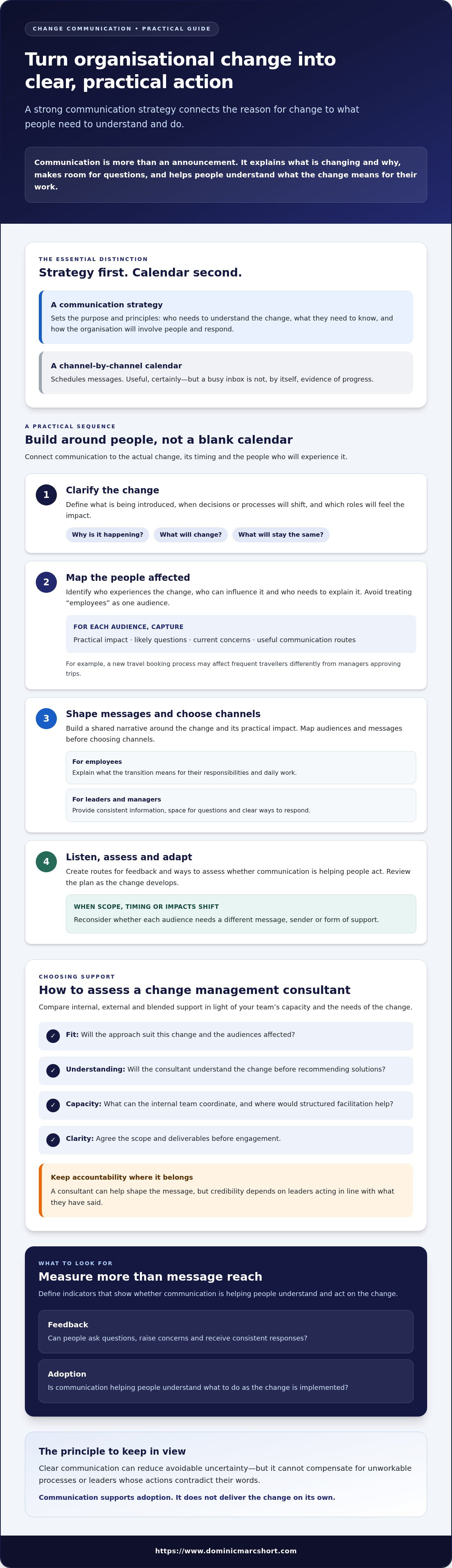
A change management communication strategy is the planned approach for explaining a change, involving affected people and responding to what they say. It sets the purpose and principles for communication; a channel-by-channel calendar simply schedules messages. The calendar matters, but the strategy helps ensure each update has a reason to exist. A busy inbox is not, by itself, evidence of progress.
Clear communication can reduce avoidable uncertainty by explaining why the change is happening, what will change and what will stay the same. Without that context, people may fill gaps with assumptions. Inconsistent updates or unanswered questions can erode confidence and give rumours room to grow. Even well-planned messages, however, can’t compensate for unworkable processes or leaders who don’t act in line with what they’ve said. Communication supports adoption; it doesn’t deliver the change on its own.
What should a change communication strategy achieve?
A useful strategy connects the organisation’s reasons for change to the experience of different audiences. Employees need to understand what the transition means for their responsibilities and daily work, not just its place on a project roadmap. The strategy should also help leaders and managers explain the change consistently, make room for questions and support clear responses.
In practice, check that the approach can:
Explain why the change is happening, what will change and what will stay as it is.
Show each audience how the transition relates to its role and responsibilities.
Provide clear routes for questions and feedback, with a way for leaders to respond consistently.
When might a change management consultant be useful?
External support may be useful when a rollout is complex, stakeholder groups have different needs or internal teams have limited capacity to coordinate communication. A consultant can bring structured facilitation and help leaders organise the work. Accountability still sits with the organisation’s leaders: an adviser can help shape the message, but cannot make it credible on their behalf.
For a change involving a corporate travel programme, the strategic change management framework for corporate travel offers a relevant companion perspective. The key question is whether communication reflects the actual processes and impacts of the transition, rather than simply announcing that change is under way.
How to Build a Change Management Communication Strategy Around Real People
Start with the change itself, not a blank communications calendar. Clarify what is being introduced, when decisions or processes will shift, and which roles will feel the impact. Then map audiences, shape a shared narrative, choose suitable channels and create ways to listen. This sequence keeps communication connected to implementation rather than treating it as a separate project.
Keep the plan practical. A change management communication strategy should help people understand what is happening and what they need to do, not become a document that needs its own project manager. Revisit it as the scope, timing or employee impacts become clearer. If a milestone moves, check whether the message, sender or support needed by each audience should change too.
How do you assess stakeholders and communication needs?
Map who experiences the change, who can influence it and who needs to explain it. For each group, record the practical impact, likely questions, current concerns and useful communication routes. Avoid treating “employees” as one audience: a new travel booking process, for example, may affect frequent travellers differently from the managers approving trips.
A simple working table can make those distinctions visible:
How should messages, channels and timing work together?
Build one core narrative: why the change is happening, what is changing, what remains stable and what happens next. Adapt the details to each audience’s responsibilities without changing the underlying facts. Coordinate leadership briefings, manager conversations, written updates and relevant training around delivery milestones. People should hear about a new process before they’re expected to use it.
For technology transitions, communication should reflect what the system and operating processes will genuinely enable, including what users need to learn or do differently. The digital transformation roadmap for business travel offers related context. Harvard Business Review’s Hard Side of Change Management also highlights why tangible project elements matter: communication is more credible when it matches the work on the ground.
As the plan takes shape, a conversation with Dominic Short on change communication may help clarify how communication can stay aligned with operational needs.
How to Evaluate a Change Management Consultant Before You Engage
The right consultant should understand the change before recommending a channel, campaign or set of deliverables. A polished presentation can be reassuring, but a more useful test is whether the proposed approach reflects your people, processes and implementation realities. Look for someone who asks thoughtful questions before reaching for a communications template.
Start by deciding who has the capacity and expertise to lead the work. Internal teams understand the organisation; external consultants may add independent facilitation and specialist experience; a blended model can combine both. None is automatically best. The right choice depends on the scale and complexity of the transition, available internal capacity and the support leaders need.
What capabilities should a change communication consultant demonstrate?
Listen for discovery questions about affected audiences, process impacts, risks and current communication practices. A capable adviser should explain how they’ll tailor messages to different responsibilities while maintaining a coherent organisational narrative. Ask how the proposed change management communication strategy will connect with training, technology implementation and operational readiness. If the answer is only “we’ll send an update”, ask how the update will address people’s needs and how the team will respond to questions.
How can you compare the consultant’s proposed approach?
Compare the substance of each proposal, not just its presentation. Check what outputs are proposed, how leaders and implementation teams will contribute, who makes decisions, and how feedback will shape adjustments. Agree the scope, decision rights, working cadence and evidence of progress before work begins. For example, clarify who approves messages and how often the consultant will review emerging questions with project leads.
Ask which success indicators will be monitored and how findings will influence the work. Message reach may show whether people received an update; feedback can reveal whether it addressed their concerns. Measures should fit the change rather than arrive as a ready-made scorecard. For a specialist example involving technology adoption in a travel programme, see the role of a change communication consultant for travel technology. A clear agreement gives both the organisation and consultant a shared basis for collaboration, without leaving important decisions to guesswork.
How to Deliver, Measure and Improve Change Communications
Communication works best as part of the delivery rhythm, not as a burst of announcements at launch. Coordinate leadership updates, manager briefings and employee messages around real project milestones, such as a process change, system pilot or new way of working. Give people a clear opportunity to respond, then make sure questions reach someone who can answer them. A steady rhythm builds familiarity without turning every update into another meeting.
Keep messages aligned with what is actually happening. If implementation timing changes, project owners should agree what needs updating, who approves it and how revised information will reach each audience. Maintain one agreed source for confirmed decisions and distinguish these from issues still under review. That helps prevent well-meaning teams from creating competing versions of the change.
Which indicators can help assess communication effectiveness?
Separate activity measures from evidence of understanding and adoption. Reach, such as whether an update was delivered through the intended channel, shows communication activity. Questions raised, responses to a short understanding check or feedback themes can indicate whether the message is clear. Use of a new process may offer an adoption indicator, but define what that means for the change before tracking it.
Choose measures the organisation can collect reliably. If there is no dependable baseline, establish a practical collection method rather than suggesting precision the data cannot support. Consider a small set of relevant indicators:
Reach: Did the intended audience receive the update?
Understanding: Can people explain what they need to do differently?
Adoption: Are people using the new process as intended?
Feedback: Which questions or barriers keep appearing?
Interpret results with care. Communication may support adoption, but a change in a business outcome can have several causes. Avoid claiming that a message alone produced a result unless the evidence supports that conclusion.
How should teams respond to resistance and feedback?
Treat concerns as useful information, not proof that employees are unwilling to change. Questions and manager observations may reveal unclear instructions, process friction or a gap in practical support. Route recurring themes to accountable leaders, respond openly where appropriate, and explain what has changed as a result. Keep confirmed decisions separate from open questions so listening does not accidentally sound like a promise.
Review these signals alongside implementation milestones. If people understand the rationale but struggle to use a new process, the answer may be better guidance or operational support, not simply another announcement. This is how a change management communication strategy can improve during delivery while keeping its core narrative consistent.
How CDABS Can Support a Bespoke Change Management Communication Strategy
Some transitions need more than a standard set of announcements. Dominic Marc Short - Independent Consultant offers bespoke change management communications packages, alongside consulting for global transformation and digital change. This may be relevant when communication needs to reflect changes to business processes, travel programmes or technology, rather than sitting apart from the work itself.
A tailored engagement could begin by understanding the change and its operational context, then clarifying which audiences are affected and what they need to know or do. From there, communication planning and delivery support can be discussed in line with the organisation’s requirements. Agree the precise scope and deliverables before work begins; no two transitions arrive with quite the same luggage.
Dominic Marc Short - Independent Consultant’s consulting experience includes process analysis, optimisation and digital transformation. Bringing these perspectives together can help decision-makers consider how communication relates to the way work is expected to change. The aim is to shape support around the real transition and the people involved, not to promise a particular adoption result.
What should an initial change communication discussion establish?
A useful first discussion should clarify the business change, its current project stage and the groups likely to be affected. It should also explore the organisation’s existing communication capacity, where leaders need support and what audiences must understand or do differently. These points provide a practical foundation before anyone starts choosing channels or drafting messages.
From there, the organisation and adviser can identify the outcomes, responsibilities and constraints that should shape a proposal. For example, a technology implementation may require communication to align with process decisions and readiness milestones. Clarifying what is confirmed, what remains open and who owns each decision makes the next steps easier to define.
How can organisations take the next step with CDABS?
Dominic Marc Short - Independent Consultant offers bespoke change management communications packages and consulting support for transformation through CDABS. Dominic brings over 30 years of professional experience across business travel management, meetings and events, and marketing. That experience provides relevant context, while the organisation’s needs and agreed scope should determine the shape of any engagement.
If you’re weighing up support, a straightforward conversation can help establish whether the change, its audiences and your internal capacity are a good fit for tailored communications support. You don’t need a perfect brief; a clear outline of the transition is a sensible place to begin.
Make Your Next Change Easier to Understand
A strong change management communication strategy connects the reason for change with what people need to know and do. Choose a consultant who takes time to understand your context, aligns communication with operational delivery and helps leaders listen and respond. Then use feedback and relevant indicators to refine the approach as the transition unfolds.
CDABS offers bespoke change management communications packages and consulting that includes process analysis, optimisation and digital transformation. Dominic Short brings over 30 years of experience across business travel management, meetings and events, and marketing. The right scope will depend on your change, your audiences and the support your organisation needs.
With a clear plan and the right support, complex transitions can feel more manageable, helping people move forward with a better understanding of what is expected.
Frequently Asked Questions
What is a change management communication strategy?
A change management communication strategy is a planned approach to explaining a business change, helping different audiences understand its relevance and preparing them to act. It connects messages, senders, channels and timing with the transition, while creating ways to hear feedback. It’s more than an announcement or email calendar. For example, a new process may require different explanations for the employees using it and the managers supporting them. The approach should evolve as implementation develops.
When should a company hire a change management consultant?
Consider external support when a change affects several teams, introduces unfamiliar processes or technology, or stretches internal communication capacity. A consultant may help structure discovery, stakeholder communication and feedback, while leaders remain accountable for the change and its decisions. First assess what your internal team can manage and where it needs additional expertise. The right choice depends on the organisation’s needs, available capability and the complexity of the transition, not on a rule that every change requires outside support.
What should a change management communication plan include?
A practical plan should set out the reason for the change, affected audiences, their information needs, key messages, suitable senders, channels, timing and feedback routes. It should connect communication with implementation milestones and relevant training. Assign owners for messages and responses, then agree how the team will review feedback. For example, if a project changes a process, explain when it changes, who it affects and where people can raise questions. Update the plan as project details develop.
How do you measure the success of change management communication?
Choose measures that reflect the change, such as whether intended audiences received information, understand key decisions, ask questions or begin using a new process. Combine activity data, such as message reach, with feedback and relevant adoption evidence. Decide how information will be collected and whether a reliable baseline exists. Review findings during delivery so the team can refine messages or support. Avoid crediting communication alone with a wider business result unless the evidence supports that conclusion.
How can leaders reduce employee resistance to change?
Leaders can address resistance by explaining the reason for change clearly, acknowledging practical concerns and giving people credible ways to ask questions. Managers also need consistent information and support to discuss what the change means for their teams. Treat concerns as information to investigate, not proof that employees are simply unwilling. Feedback may point to unclear messages, process barriers or decisions that remain unresolved. Responding openly helps people understand what is confirmed and what the organisation is still considering.
What is the difference between change management and change communication?
Change management coordinates the broader transition, including stakeholder impacts, leadership, readiness, training and implementation. Change communication is a connected part of that work. It focuses on what people need to hear, who should explain it, when messages are needed and how responses will be considered. Clear communication supports the change, but it can’t fix every operational or organisational barrier. For instance, explaining a new process is useful, but the process itself must also be workable.
Can a change management consultant support a technology rollout?
Yes. A consultant can help plan communication around a technology change by identifying affected groups, explaining what will change in their work and clarifying what support they may need. Communication can be coordinated with leadership updates, feedback opportunities, training and implementation milestones. For example, teams may need guidance before they are expected to use a new system. The consultant’s precise role and deliverables depend on the engagement scope, which should be agreed with project owners.


Comments