Corporate Meeting Planning: Roles and Setup Guide
By Dominic Marc Short · 3 November 2026 · 12 min read
A meeting agenda is only the visible part of a well-planned corporate event. Corporate event planning aligns the business objective with the audience, programme, responsibilities, venue and follow-up; a typical corporate meeting can last from 1 hour to 1 day. Effective corporate meeting planning services bring these moving parts together so the meeting has a clear purpose, rather than simply a calendar invitation with refreshments.
It’s reasonable to expect the details to matter: unclear ownership, a rushed timeline or a venue that doesn’t suit the format can distract from the meeting’s purpose. This guide explains how to define that purpose, assign planning roles, build a timeline, assess a venue and decide when corporate meeting planning services make sense. You’ll have a practical framework for planning an organised, purposeful meeting that’s more memorable than the coffee.
Table of Contents
- Conducting a venue and equipment walkthrough
- Why organise a corporate meeting?
- What is corporate event planning?
- Assigning planning roles and setting a timeline
- Full-service corporate meeting planning
- Dominic Marc Short - Independent Consultant: Meeting and Conference Organization
Conducting a venue and equipment walkthrough
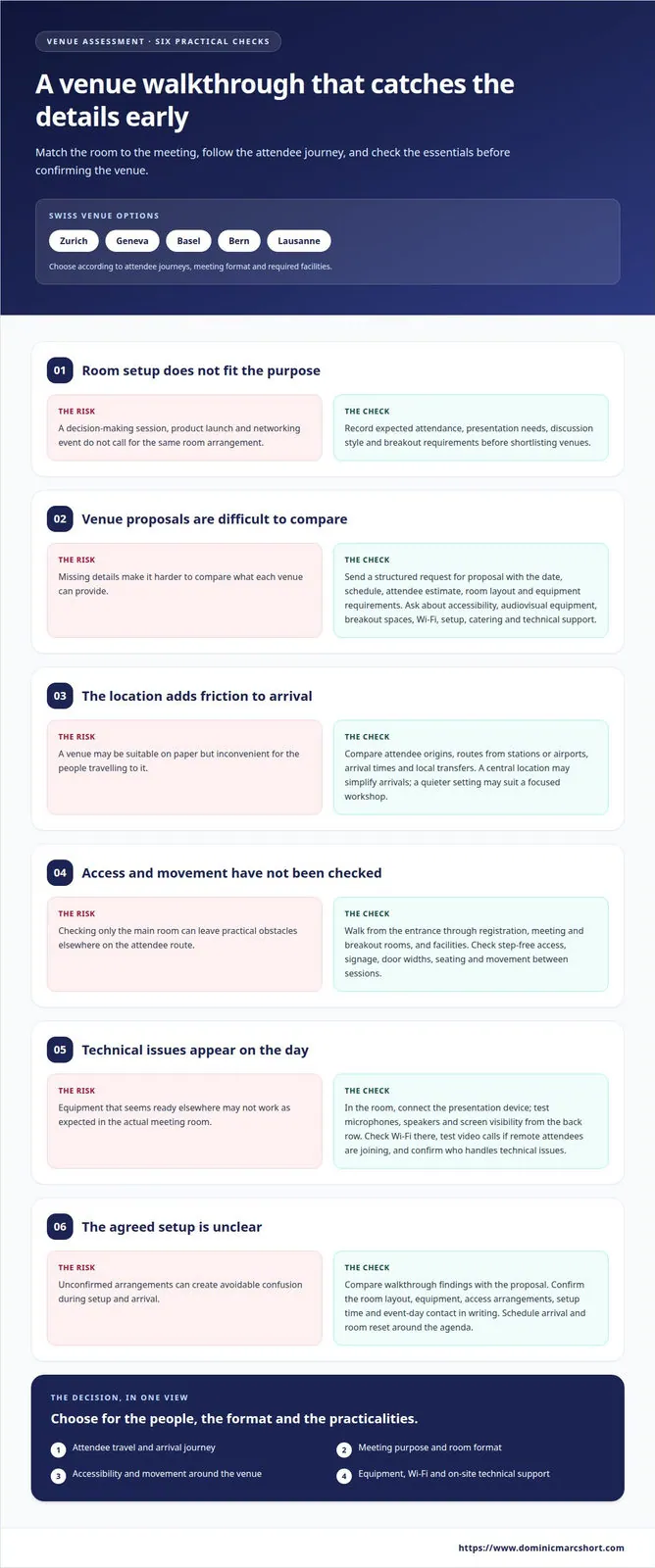
Zurich, Geneva, Basel, Bern and Lausanne can all suit corporate meetings. The best choice depends on attendee journeys, meeting format and the facilities the project requires.
- Match the format to the meeting’s purpose. A decision-making session needs a different room setup from a product launch or networking event. Record expected attendance, presentation needs, discussion style and any breakout requirements. These details shape the venue shortlist and help avoid choosing a theatre-style room for collaborative work.
- Send a precise venue request for proposal. Include the date, schedule, attendee estimate, room layout and equipment requirements. Ask each venue to describe its rooms, accessibility arrangements, audiovisual equipment, breakout spaces and Wi-Fi. Request clear details about setup, catering and technical support. A structured RFP makes responses easier to compare.
- Assess the location against attendee journeys. Compare Zurich, Geneva, Basel, Bern and Lausanne according to where participants are travelling from. Consider the route from the station or airport, arrival times and local transfers. A central location may simplify arrivals, while a quieter setting may better suit a focused workshop. Let the audience and schedule guide the decision.
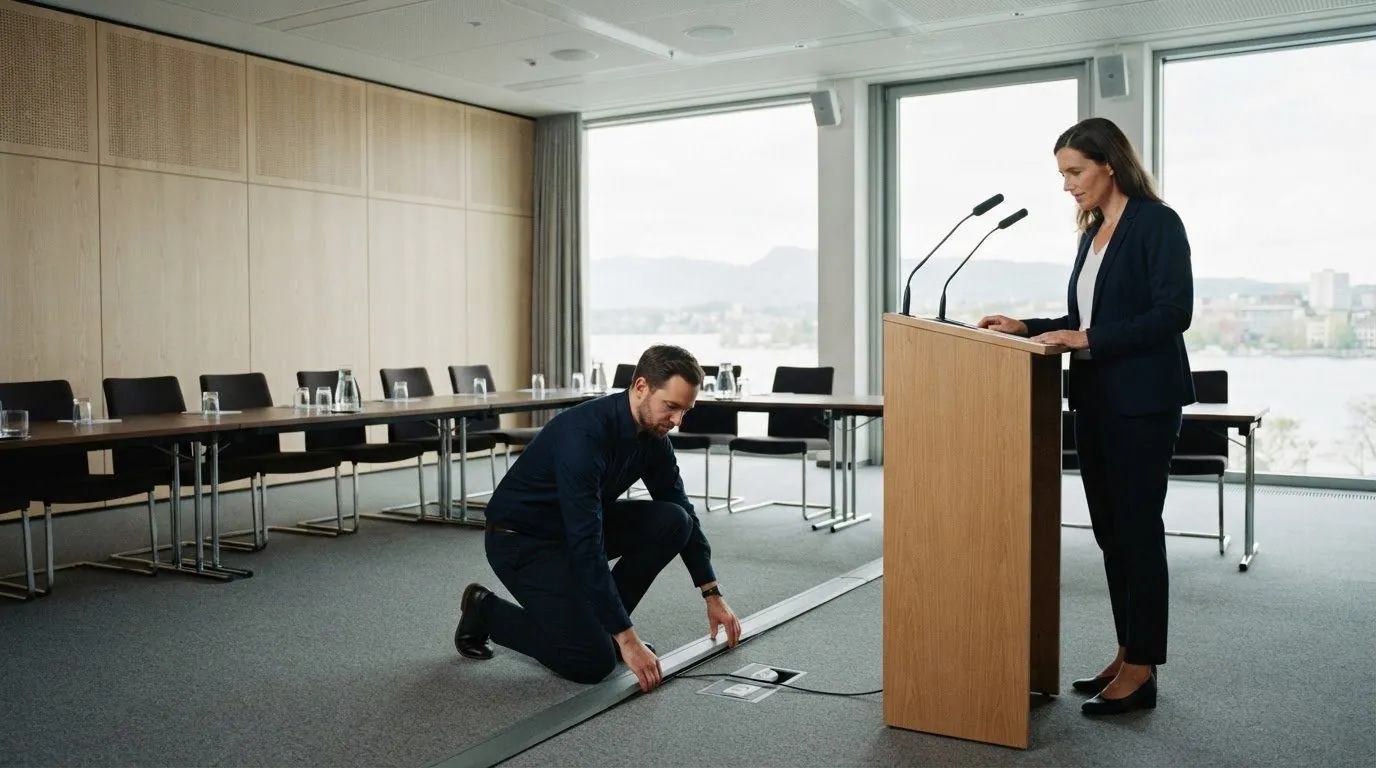
- Walk the full attendee route before committing. Start at the entrance, then follow the route to registration, the meeting room, breakout areas and facilities. Check step-free access, signage, door widths and seating arrangements. See whether participants can move between sessions without crossing a presentation area. Practical access matters from arrival through departure, not just inside the main room.
- Test every technical detail in the actual room. Connect the presentation device, test microphones and speakers, and check screen visibility from the back row. Confirm Wi-Fi access in the meeting space, not just the reception area. Try the video-call setup if remote participants will join. Ask who handles technical issues during the event, then record the answer in the project plan.
- Confirm the setup and timing in writing. Compare the walkthrough findings with the RFP response before approving the venue. Confirm the room layout, equipment, access arrangements, setup time and event-day contact. Build a realistic arrival and room-reset schedule around the agenda. These final details help the team start on time, without discovering that the screen faces the wrong wall.
Zurich, Geneva, Basel, Bern and Lausanne are all suitable options. Choose a venue based on attendee travel, meeting format, accessibility, room setup and the required equipment and support.
Why organise a corporate meeting?
For a Swiss corporate event, assess venue and supplier contracts, the business purpose, expense records and applicable tax treatment. Plan for cancellation, liability and equipment damage. Event insurance can be selected to cover these risks, while standard business liability policies may not cover event-related risks.
- Set the communication plan around the event objectives. Before sending invitations, state why the event is happening, who should attend and what participants need to do. Share the agenda at least 48 hours in advance, with practical details such as timings, access and preparation. During the event, use the chair’s opening remarks and session transitions to keep the objectives visible. Clear messages help attendees understand their role.
- Build a budget that reflects the whole event. List venue, catering, travel, audiovisual support, staffing and communications as separate lines. Then set aside a contingency fund of 10% to 15% of the total event budget. This reserve gives the organiser room to respond if attendance changes or a technical requirement emerges. Record who approves adjustments, so a small change doesn’t become a budget surprise.
- Arrange Logistics and Technical Services Map the event schedule against each service, from registration and room access to microphones, presentations and refreshments. Assign a named owner to each task, and confirm delivery times and handover points with suppliers. For a hybrid session, test the joining instructions and sound with a remote participant before doors open. Avoid relying on one person to solve every technical issue.
- Prepare a risk and cancellation response. Review supplier cancellation terms, payment milestones and responsibilities for rented equipment before signing. Identify what happens if a speaker withdraws, attendance shifts or the venue becomes unavailable. Event insurance can address selected cancellation, liability or equipment-damage risks, but the cover must match the exposure. Keep the relevant contract details and response contacts together in the event plan.
- Gather Feedback and Measure Success Choose measures that match the objectives before the event begins. A knowledge-sharing meeting might assess whether attendees can apply a process, while a networking event could gather feedback on useful connections. Send a post-event survey about the sessions, experience and venue, then review responses alongside attendance and delivered outputs. Thank attendees and speakers, share relevant presentations, and record improvements for the next event.
Share relevant presentations or photos with participants, and invite them to comment on what they found useful. A business meeting may be organised to share knowledge, build relationships or make decisions, so use its purpose to assess responses. Attendee feedback and pre-event surveys can help tailor session topics and formats for future corporate events. After the meeting, send a thank-you message, share presentations or photos, and request feedback. This follow-up supports event measurement and future planning while giving participants a useful record of the discussion. Organisers should also review internally what went well and what could be improved. Consider those observations alongside attendee comments when planning the next meeting, so successful choices can be retained and shortcomings addressed.
What is corporate event planning?
Corporate event planning connects the meeting’s purpose with preparation, participation and follow-through. Treat each stage as part of one project, from registration to the actions attendees take afterwards.
- Prepare Registration and Attendee Materials Build a registration process that collects only the details needed to organise the meeting. For example, ask attendees to select relevant sessions or identify access requirements. Use the registration list to plan seating, catering and materials, then prepare a clear confirmation with arrival instructions and the meeting contact. Check names and email addresses before sending. Accurate details help participants arrive prepared, rather than starting with an administrative mystery.
- Circulate Agendas and Prepare Attendees Share an agenda that identifies each session, its purpose and the decision expected. Send supporting documents with it, and clearly mark any pre-reading or preparation. If a finance team must approve a proposal, explain what information attendees should review beforehand. Give presenters their time allocations and clarify who leads each discussion. This preparation lets participants arrive confident and ready to contribute, instead of seeing key material for the first time in the room.
- Track Cost per Attendee Calculate cost per attendee by dividing total event expenditure by actual attendance. Track planned and final figures separately, recording venue, catering, travel, technical support and materials in Swiss francs (CHF). For example, compare the catering estimate with the final invoice and attendance count. This shows which costs changed and why. Use the same calculation for future events, while noting differences in format or programme that affect a fair comparison.
- Follow Up and Assign Actions Send meeting minutes within 48 hours, with each decision, action, owner and deadline recorded. A statement such as “review the proposal” needs a named owner and a completion date to become useful. Share relevant presentations or materials with attendees, then request feedback about the sessions and practical arrangements. Keep follow-up concise: participants should be able to find their next step without searching through a long recap.
- Connect the Meeting to Business Outcomes Before closing the event plan, define what useful progress looks like after the meeting. A training session might aim for attendees to apply a process, while a project meeting might need an approved decision and assigned tasks. Link each outcome to an action or measure, then review progress after the event. This turns a productive discussion into visible work, rather than a polished set of minutes that nobody opens again.
Assigning planning roles and setting a timeline
Start by linking the meeting purpose to its participants, decision-makers and required preparation. Then give every planning element an owner and deadline, so the event moves forward without crossed wires.
- Choose participants according to the decision. For a decision-making meeting, use the recommended benchmark of 7 plus or minus 2 people. Invite those who bring essential expertise or hold authority over the outcome. A wider audience may suit an information session, but it can make detailed discussion harder. Record why each attendee is needed, and encourage invitees to contribute relevant material beforehand.
- Assign Meeting Roles Appoint a chair to keep discussion aligned with its purpose, and a facilitator to guide participation. Give a note-taker responsibility for recording decisions, actions and owners. Name a timekeeper to flag agenda overruns, plus a technical lead for virtual participation. These roles can be combined for a small meeting, but assign each responsibility clearly. The chair should not also have to solve every connection problem.
- Separate planning ownership from meeting roles. Name one coordinator to maintain the master timeline, track decisions and connect workstreams. Assign other owners to venue arrangements, attendee communications, programme content and technical setup. For example, the programme owner can approve session changes while the coordinator updates the run sheet. Clarify who has final approval, so an important element doesn’t get stuck between teams.
- Set the Planning Timeline Work backwards from the event date and place decision deadlines against each dependency. Start corporate event preparations at least six months in advance. Book keynote speakers at least three months before the event, then confirm vendor and speaker details two to four weeks before it. These milestones keep programme, supplier and communications decisions connected, rather than leaving the final fortnight to do all the heavy lifting.
- Make the timeline usable for the whole team. Record each task, owner, due date, approval point and dependency in one shared schedule. Mark when the agenda must be final, when participant materials go out and when the virtual format needs testing. Review the schedule at regular planning meetings, focusing on overdue decisions and tasks that block others. Visible owners and deadlines make delays easier to spot early.
- Plan a controlled route for changes. Agree how the team will assess late requests, such as adding a speaker or changing a session. Before approval, the coordinator should note the impact on timing, technical needs and attendee communications. Keep the latest agenda and run sheet clearly identified, so suppliers and presenters don’t work from older versions. This simple discipline helps everyone work from the same plan on event day.
Full-service corporate meeting planning
Plan a successful meeting by defining its objective, audience and format, then assigning owners and coordinating delivery. Full-service corporate meeting planning services bring the programme, speakers, suppliers, logistics and follow-up together under one plan.
- Compare Planner and In-House Options Map the event workload before deciding who should lead it. In-house planning keeps decisions close to internal teams, which can work well when capacity and relevant experience are available. An external planner can coordinate several workstreams and suppliers, helping prevent event tasks from competing with employees’ usual responsibilities. Compare the oversight needed, the programme’s complexity and the time your team can commit.
- Choose a Meeting Planning Service Choose support by matching its scope to your event’s needs. Clarify who will manage the programme, venue coordination, speakers, supplier communication, attendee information and event-day delivery. For a hybrid conference, include the virtual experience in the same planning framework as the in-person sessions. A contract should set out responsibilities, deliverables, approval processes, payment terms, cancellation arrangements and how changes are handled. Corporate meeting planning services work best when every commitment is clear.
- Plan the Meeting Step by Step Begin with the business objective and target audience, then select the format and develop the programme. Assign an owner to each workstream, coordinate speakers and suppliers, and schedule communications for attendees. Bring the run sheet, room arrangements and technical plan together before the event. Afterwards, collect feedback and track agreed actions. This sequence connects creative decisions to practical delivery, rather than leaving the event to a last-minute scramble.
- Coordinate the details as one project. Full-service planning means aligning the purpose, programme and operational decisions, not simply booking a room. For example, a product launch may need speakers, demonstrations, attendee communications and a hybrid option for remote colleagues. Keep one current schedule and clear approval points, so updates reach the right people. Consider corporate meeting planning services when the event’s moving parts exceed the capacity your internal team can reasonably devote.
Business meeting organisers should define the meeting’s goal and target audience before choosing the venue, programme and communications. Once those choices are clear, agree plans with speakers and suppliers, create a run sheet and schedule communications. Venues specialising in corporate events often provide additional planning and logistics support, so consider that support when deciding how responsibilities will be covered.
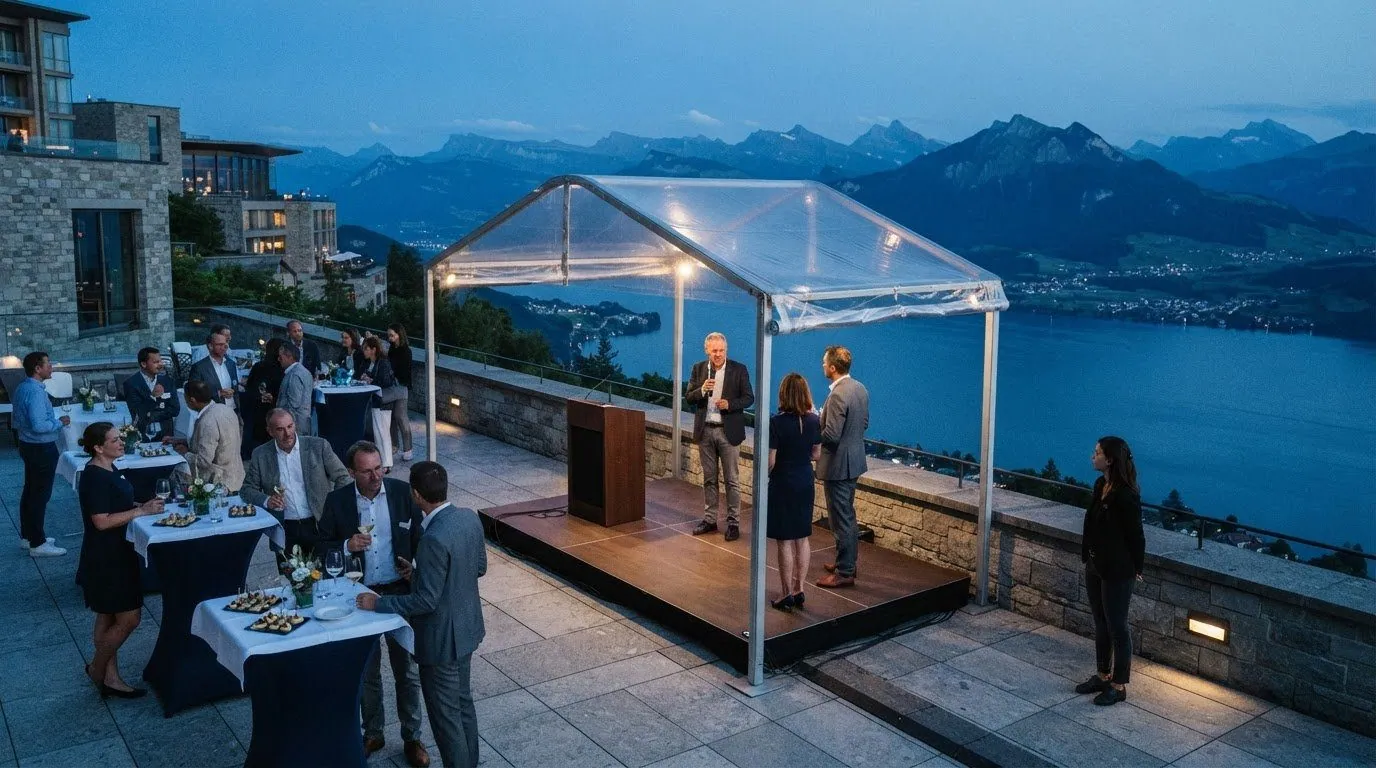
Catering, decor and atmosphere can affect how welcome business meeting guests feel, so consider them alongside practical arrangements. A corporate all-hands meeting for 200 people may use a reception marquee, auditorium or privatised event space. Balance formal sessions with informal networking breaks in a corporate event agenda, giving guests opportunities for both structured discussion and connection. These choices help align the setting and schedule with the meeting’s goal and audience.
Dominic Marc Short - Independent Consultant: Meeting and Conference Organization
Dominic Marc Short, Independent Consultant, provides meeting and conference organisation for businesses and associations planning corporate events. This support is useful when coordinating the programme, venue, suppliers and attendee experience would stretch internal capacity, or when several workstreams need to come together under one plan.
From early planning through event delivery, the focus is on connecting practical arrangements with the meeting’s purpose. That means keeping the programme, logistics and communications aligned, so organisers can concentrate on the decisions and people that matter. For meetings linked to broader organisational change, change management communications packages can support clear communication around the event.
For support with an upcoming corporate meeting or conference, contact Dominic Marc Short, Independent Consultant.
Turn your next meeting into purposeful progress
Use the next planning decision to connect your meeting with wider organisational priorities. A carefully designed event can support a transformation programme, bring teams together around change, or create space for business decisions. Corporate meeting planning services are most valuable when event delivery and business purpose work in step, rather than competing for attention.
Dominic Marc Short, Independent Consultant, offers meeting and conference organisation, alongside business travel management consulting and global transformation management. This combination can be relevant when a meeting forms part of a broader operational or organisational project. The next step is to set out what the event needs to achieve and where coordination would help your team move forward.
Your next corporate meeting can be more than a date in the diary. Let its purpose guide the planning, and take the next step with confidence.
Frequently Asked Questions
Where do you plan meetings?
Corporate meetings can be planned across Switzerland in a venue suited to the audience and format. Options include company premises, conference venues and hotels with meeting facilities. For a team spread across different regions, consider a central location or a hybrid format that lets some participants join remotely. The choice should reflect attendee travel, programme needs and the kind of interaction the meeting is designed to encourage.
What services do corporate meeting planners provide?
Corporate meeting planners can organise meetings and conferences by coordinating practical and programme requirements. This may include developing the format, managing suppliers, supporting speaker arrangements, coordinating logistics and overseeing delivery. Dominic Marc Short, Independent Consultant, provides meeting and conference organisation, with support shaped around the event’s scope and purpose. This is useful when an organisation needs experienced coordination to bring the different elements together.
Related articles

7 September 2026 · 14 min read
How to Implement Corporate Meeting Management Solutions: A Strategic 2026 Guide
Tired of herding cats in meetings? Our guide to corporate meeting management solutions helps you centralise ops, boost ROI, and finally enjoy your biscuits i...
5 November 2026 · 14 min read
Corporate Event Planning Services in Switzerland for Teams
See how corporate event planning services in Switzerland bring venues, suppliers, guest travel and event-day delivery together for a smooth, engaging team event.

19 October 2026 · 14 min read
Corporate Travel Expense Audit Best Practices: A Practical 2026 Guide
Explore corporate travel expense audit best practices to ditch receipt dramas, keep finance smiling, and streamline business travel compliance with ease.