Association Conference Management Services: A 2026 Strategic Case Study
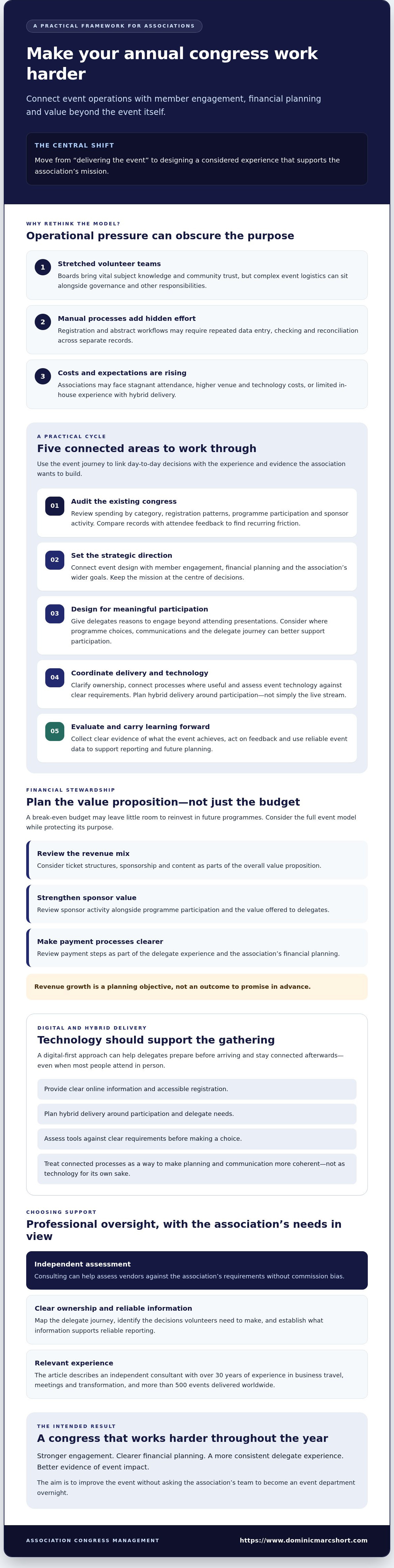
What if your annual congress could become more than a demanding date in the diary? For associations facing stagnant attendance, rising venue and technology costs, or limited in house experience with hybrid delivery, association conference management services can help turn operational pressure into a strategic opportunity. The goal is a seamless delegate experience, stronger financial planning and clearer evidence of what the event achieves.
Conference teams can feel stretched: delivering a polished event while protecting the association’s mission is no small task. This 2026 strategic case study explores how expert management can help associations improve their congresses without losing sight of the people and purpose behind them. It covers practical ways to strengthen engagement, consider different revenue streams and plan for measurable post event impact.
We’ll follow the journey from strategic planning and event organisation to digital transformation, hybrid delivery and post event evaluation. We’ll also consider how independent consulting can support decisions without favouring particular vendors, and how clear communications can help members adapt to new systems. The result is a practical framework for making your annual conference work harder throughout the year, without asking your team to become an event department overnight.
Table of Contents
The 2026 Landscape of Association Conference Management Services
An annual congress is more than a venue, a programme and a registration desk. Associations need events to support member engagement, financial resilience and year round value, while keeping their mission at the centre. That broadens the role of a Professional Congress Organiser (PCO). Practical delivery remains essential, but event decisions should also support the association’s wider goals. Effective association conference management services bring strategic planning and event organisation together instead of treating them as separate jobs.
Event management covers activities such as budgeting, scheduling, site selection and vendor coordination, as outlined in this Event management overview. For associations, the strategic question is how these activities combine to create a worthwhile experience and a sustainable event model. A break even budget may appear prudent, but it can leave little room to reinvest in future programmes. Revenue planning should consider the whole value proposition, including ticket structures, sponsorship and content, while protecting the event’s purpose. Revenue growth is a planning objective, not an outcome anyone should promise in advance.
The Problem: The “Volunteer Burnout” Cycle
Volunteer boards bring essential subject knowledge and community trust. They may not have the capacity or specialist experience to manage complex logistics alongside governance and other responsibilities. When event delivery depends on a few people repeatedly taking on extra work, fatigue can affect continuity and the wider health of the association.
Manual registration and abstract workflows can add hidden effort. Information may need to be re entered, checked and reconciled across separate records. The strategic gap is the distance between an association’s ambitions for engagement and financial resilience, and the time, systems and expertise available to deliver them.
The Solution: Professional Oversight and Process Optimisation
Professional oversight can turn that gap into a manageable work plan. Start by mapping the delegate journey, the decisions volunteers need to make and the information required for reliable reporting. Then identify where clear ownership and better connected processes can reduce avoidable administration. The goal is a calmer, more consistent experience for delegates and organisers, not technology for its own sake.
For associations with travelling delegates, consider how travel management processes and event registration can work together. Coordinated information can make planning and communication more coherent, while a reliable source of event data supports registration oversight and financial reporting. Independent consulting can also help an association assess vendors against its needs without commission bias. For further context, see this guide to strategic business travel consulting.
A digital first approach matters even when most delegates attend in person. Clear online information, accessible registration and well planned communication help attendees prepare before arriving and stay connected afterwards. Digital systems should support the gathering, not become the gathering. Dominic Marc Short - Independent Consultant brings over 30 years of experience in business travel, meetings and transformation, and has delivered more than 500 events worldwide.
Case Study: Transforming a National Scientific Congress
A national scientific congress can be a valuable meeting point for a research community, but familiar routines may not deliver enough value for delegates or the association. The following case study framework shows how to review an event, redesign its offer and make considered choices about payments, travel and technology. It focuses on decisions and measures that can support improvement, rather than presenting unverified results as established fact.
Step 1: Audit the Existing Event Framework
Review available event records, including spending by category, registration patterns, programme participation and sponsor activity. Compare these findings with attendee feedback. Look for recurring friction, such as repeated data entry, unclear payment steps, sessions that attract limited interest, or feedback that is collected but never acted upon. A travel management system audit can also help assess how travel processes fit into the wider delegate journey.
This is the time to question the programme’s “sacred cows”. A session or format may have served the congress well in the past, but tradition alone does not show that it still advances the association’s mission. Identify what to retain, revise or retire, and make the reasoning clear to stakeholders.
Step 2: Redesign the Value Proposition
A call for papers remains important to a scientific meeting, but it need not be the whole invitation. A call for engagement can also encourage delegates to join discussions, share practical experience and connect across disciplines. Shape the programme around different participants’ needs, including those of early career researchers, returning members and people joining remotely. The aim is to create reasons to take part, not simply to fill timetable slots.
Step 3: Choose Technology and Implement Solutions
Assess registration, mobile app and hybrid streaming tools against defined requirements: ease of use, accessibility, reporting needs and compatibility with existing processes. Modern payment and travel solutions may make registration and delegate planning more coherent, but technology should address a demonstrated problem. Choose tools for the work they make simpler, not because they are new.
Digital access may reduce some travel demand, but it does not automatically make an event lower carbon. Assess the overall format and its impacts rather than assuming that streaming settles the question. For ideas on professional development in the business events sector, the Professional Convention Management Association (PCMA) is a useful reference.
Before and after changes, track agreed measures such as non dues revenue, administrative workload, attendance patterns and participant feedback. Avoid presenting a target or projected improvement as a verified result unless supporting case data is available. Associations considering this kind of review may explore event management and consulting expertise as part of their planning.
Financial Stewardship: Revenue Diversification and Cost Control
A financially resilient conference is not simply one that spends less. It is one where costs, income and delegate value are planned together, with clear oversight before, during and after the event. Strong association conference management services can help organisers connect these decisions so the budget supports the mission and is understandable to the people responsible for it.
Make Sponsorship More Meaningful
A sponsorship prospectus can offer more than a logo on a wall. Build packages around relevant ways for sponsors to contribute, such as supporting a session or engaging delegates through useful, clearly defined activities. Where appropriate, aggregated event insights may help demonstrate audience interests and sponsor value. Be transparent about what information is collected and shared, and ensure any proposed insight is appropriate for the association and its participants.
Longer term strategic partnerships may provide more continuity than relying only on one off sponsorships. Match partner involvement with the association’s objectives, and maintain a clear distinction between useful collaboration and a programme that feels like an extended sales pitch.
Optimise Corporate Travel Payments
Speakers and board members may have different travel and payment needs. Where appropriate, centralising payment processes can reduce the number of separate arrangements to coordinate and make financial reporting easier to reconcile. For associations handling registration in multiple currencies, check whether payment solutions can support the currencies and reporting requirements relevant to the event. This guide to optimising corporate travel payments offers further context.
Automated expense checks can flag transactions that appear to exceed agreed budgets, giving finance teams a chance to review them promptly. These checks support oversight, but they do not replace clear approval rules or human judgement. Agree budget categories and reporting responsibilities before registration opens, then monitor commitments against forecasts as the event develops.
Find Value Through Frugal Innovation
Frugal innovation means deciding where investment will be most visible and useful. A well designed stage, thoughtful lighting or clear wayfinding may do more for the attendee experience than a long list of costly extras. Prioritise elements that support the programme and delegate comfort, and remove what adds complexity without adding value. Elegance does not require a fleet of unnecessary gadgets.
Build Revenue Beyond the Event Dates
Digital content archives can extend the usefulness of conference sessions after the event, subject to speaker permissions and suitable access arrangements. Associations can also consider different registration options, such as distinct access for members and non members, where these fit their membership model. Review the financial and administrative implications before introducing a new offer.
Plan for uncertainty with scenario based budgets, regular financial reviews and a clear understanding of event commitments. Consider relevant cancellation terms and contingency options when assessing suppliers. The aim is not to predict every surprise, but to make sure one unexpected turn does not rewrite the whole financial plan.
The Hybrid Engagement Framework: Beyond the Live Stream
A hybrid conference works best when virtual delegates are participants, not an audience watching from the edge of the room. Start by defining what each group should be able to achieve, then design the programme, interaction and follow up around those outcomes. This gives association conference management services a role beyond broadcasting the in person event: connecting members and extending the value of the programme.
Engage Remote Attendees Effectively
Build sessions for online participation, with clear joining instructions, planned interaction and a moderator who can move attention between the room and the chat. The moderator can bring remote questions into the discussion, invite speakers to respond and keep the chat from becoming a parallel event. If using AI driven attendee matching, make it an optional aid based on relevant interests and clear participant preferences, rather than an unexplained networking tool.
Virtual audiences benefit from focused sessions, concise summaries and useful recordings that are easy to return to between other commitments. Coordinate speakers across time zones by confirming availability early, sharing one schedule with all contributors and agreeing how questions and technical checks will be handled. Where live participation is impractical, consider a recorded contribution or repeat discussion, while keeping the experience consistent for delegates.
The conference can also become a year round engagement platform. Use audience questions and programme themes to shape regular webinars, then connect each session to the next through follow up resources and opportunities to contribute. This creates a more continuous member experience without asking everyone to attend another full length event.
Plan Sustainable Event Logistics
For a national hybrid event, establish a consistent baseline before making claims about environmental performance. Record relevant factors such as delegate travel modes, venue energy information where available, catering and material choices, and digital production requirements. Compare like with like across events, and explain what the figures include and exclude. Hybrid delivery may reduce some journeys, but streaming and production also have impacts.
Associations can build trust by reporting actions and evidence plainly, including limitations, rather than relying on broad “green” language. Transparent sustainability reporting gives members a clearer view of progress and where further work is needed. Credibility comes from showing the evidence, not just choosing greener sounding language.
Choosing the Right Partner for Association Growth
The right partner should make an association more capable, not less involved in its own decisions. Large agencies can bring broad delivery teams and established processes. An independent consultant may offer close collaboration, direct access to senior expertise and advice that is not shaped by vendor commissions. The best fit depends on the event’s complexity, the association’s internal capacity and the strategic support required.
For associations and NGOs, commercial discipline must sit alongside an understanding of the mission. A partner needs an “NGO heart” to respect member value and purpose, with a “Corporate head” to manage budgets, processes and delivery carefully. Good association conference management services help teams make informed choices while leaving ownership of the organisation’s priorities with the association.
The CDABS Advantage: Experience and a Personal Approach
CDABS brings over 30 years of experience in business travel, meetings and transformation. Experience does not make every event predictable, but it can help a partner respond when plans change and keep decisions connected to wider objectives. CDABS founder Dominic Short has delivered more than 500 events worldwide, bringing practical perspective to the planning and delivery of complex gatherings.
New formats and digital systems also require clear communication. Bespoke change management communications packages can help boards, staff, speakers and members understand what is changing, why it matters and what they need to do next. Early stakeholder engagement can make a transition feel considered rather than surprising members with a new login screen. For a broader view of value beyond cost reduction, read about the real ROI of business travel consulting.
Manage the Digital Shift
In 2026, digital tools should support a clear event purpose, whether that means simplifying registration, improving reporting or making participation more accessible. Audit the current conference model, identify the highest priority gaps, then agree on practical changes, responsibilities and measures of progress. Plan changes well ahead of the congress so there is time to communicate them and prepare the people who will use new systems. An independent adviser can help assess options without favouring a particular vendor.
For associations considering how technology and organisational change connect, this guide to the role of a corporate travel transformation adviser offers a useful perspective on managing digital shifts. A strategic review can help clarify what to retain, what to improve and whether expert meeting and conference organisation or transformation support is appropriate.
Make Your Next Congress a Platform for Growth
A successful conference can do more than run smoothly on the day. A strategic audit helps associations make better informed choices about delegate experience, event finances and ways to extend digital engagement beyond the congress. The strongest association conference management services connect these decisions to the organisation’s mission and members’ needs.
That takes sound financial thinking and thoughtful change management. Independent consulting can keep recommendations focused on the association’s priorities, while bespoke communications can help members understand changes to formats or systems. Dominic Short brings over 30 years of experience and has delivered more than 500 events worldwide across corporate and association sectors.
If your next congress is ready for a fresh approach, a strategic review can help clarify what to retain, improve and plan next. Progress does not always require a complete reinvention; it can begin with a clear assessment of the event’s priorities and processes.
A purposeful, engaging event can also give your association a stronger foundation for the year ahead.
Frequently Asked Questions
What are association conference management services?
Association conference management services combine the planning and delivery of a congress with the coordination needed to support its objectives. This can include programme logistics, registration, supplier coordination, delegate communications and financial planning. The scope varies: some associations need help with a specific event, while others seek broader support to improve processes and member engagement. The purpose is to make delivery more manageable while keeping the association’s mission in view.
How much does it cost to hire a Professional Congress Organiser (PCO) in 2026?
There is no single standard fee for hiring a PCO in 2026. A reliable estimate depends on the agreed scope, including the event’s format, complexity, duration and the organiser’s responsibilities. Ask for a proposal that separates project work, event delivery and additional supplier costs. This helps your team compare like with like rather than treating a general estimate as a tailored quote.
Can an independent consultant manage a national scale association conference?
Yes, an independent consultant can lead planning and coordination for a national conference if the delivery model matches the event’s requirements. This may involve working with the association’s team and selected suppliers, rather than one person handling every task. Check experience with comparable events, clarify responsibilities and agree how decisions will be made. CDABS founder Dominic Short has delivered more than 500 events worldwide across different formats and contexts.
How do we transition our traditional congress to a hybrid model?
Begin by defining what remote delegates should be able to do, not simply what they should be able to watch. Review the programme, accessibility needs, speaker availability and technical requirements, then choose a format that supports interaction as well as streaming. Pilot changes where practical, brief speakers and moderators, and explain the new experience clearly to members. Gather feedback afterwards and use it to refine the next congress.
What is the difference between event planning and strategic conference management?
Event planning focuses on practical elements such as schedules, venues, suppliers and delegate logistics. Strategic conference management connects those tasks to wider organisational aims, including member engagement, financial planning and learning beyond the event dates. It also involves reviewing outcomes and using evidence to inform future decisions. A conference can run smoothly yet still miss an opportunity to create lasting value for its association.
How can we improve sponsorship revenue for our annual meeting?
Start by understanding what sponsors value and what delegates will find relevant. Build clear sponsorship options around appropriate involvement, such as supporting a session or contributing expertise, rather than offering visibility alone. Explain what each option includes, how impact will be reviewed and what information may be shared. Consider longer term partnerships where they fit the association’s mission. Protect trust by setting transparent boundaries and avoiding promises the event cannot substantiate.
Does professional management help with member retention?
Professional management can support member retention by helping an association deliver events that are relevant, accessible and well organised. A thoughtful programme, clear communication and useful opportunities to connect may strengthen members’ sense of involvement. Event management alone cannot guarantee that members will renew. Track feedback and participation, then consider these findings alongside other membership information to understand what members value and where the association can improve their experience.
What are the key sustainability requirements for association events in 2026?
There is no single sustainability checklist that applies to every association event. Set practical objectives, gather information on relevant areas such as delegate travel, catering, materials and digital production, and report transparently on what was measured. Consider venue and supplier practices as part of procurement, and explain any limits in your data. Hybrid access may reduce some travel, but it also has impacts. Assess the whole event rather than making assumptions.



Comments